
Custom software development in Brisbane
We build custom software for Brisbane businesses and organisations: booking systems, CRMs, client portals, awards and event platforms, and the internal tools that replace a spreadsheet nobody trusts anymore. Projects start at $3,000 and usually go live in 3 to 8 weeks.
Everything runs in the browser, so your team and your customers use it from a phone or a laptop without installing anything. It can work in English, Spanish or both, and you own the source code from launch day.
- Investment
- from $3,000
- Timeline
- 3-8 weeks
- Maintenance
- from $99/month
What's included
- Custom business logic
- Integrations (Stripe, Supabase, Resend, etc.)
- Admin dashboard
- Authentication and user roles
- Automatic transactional emails
- Source code is yours, no vendor lock-in
How much does custom software development cost in Brisbane?
Our custom software projects start at $3,000. A focused tool with one job, like a booking flow with payments or a client portal, sits near that number. A platform with several user roles, a few integrations and two languages costs more, and the number is fixed before anything starts: the proposal sets out in writing what gets built, the price and the launch date.
Payment is usually 50% upfront and 50% on delivery, and bigger projects can be split into more instalments. What moves the price is the number of things the software has to do and the services it connects to, like Stripe for payments, email or calendars. Each integration is listed in the proposal.
After launch, a care plan from $99 a month covers managed hosting, security updates, backups and monitoring. New features are quoted as additional development, and existing clients get 15% off because we already know the project.
When does custom software beat a SaaS subscription?
Custom software makes sense when the off-the-shelf tool makes you work around it. The usual signs: you pay per seat for a long list of features nobody opens, the part that matters most to you is the part the software doesn't do, and the gap gets filled with spreadsheets, copy-paste and WhatsApp messages.
Commissions are another sign. If a platform takes a cut of every booking or ticket, a system you own pays for itself once the volume is there. So does data: when your clients' information has to live in a specific place and follow your rules, it's simpler to own the database than to negotiate with a vendor.
And sometimes the subscription is the right call. If a tool already fits your process and you use most of what you pay for, keep it. We'd rather tell you that on the first call than build something you didn't need.
Booking systems and CRMs for small businesses
A booking system and a CRM are the two pieces of custom software small businesses ask us for most. A CRM (customer relationship management software) keeps every client, enquiry and follow-up in one place, so nothing depends on someone's memory or inbox. A booking system lets people pick a time and pay without waiting for anyone to reply.
Latin Temple Beauty, a med spa in Stones Corner, runs its bookings, client portal and digital gift cards on one platform we built, in English and Spanish. In the first four weeks after launch, organic visits went up 45% and the share of visitors who booked went up 30%. The team saves about 3 hours a day, and the same booking system will run their second location.
Southernflow is the CRM we built for education and migration agencies. It follows each student through a nine-stage pipeline from first enquiry to graduation, warns the agency before a visa or CoE expires, and gives students their own portal in English, Spanish or Portuguese.
What else do we build?
Anything where a process currently lives in email and Excel. Latin American Awards Australia used to receive nominations by email and track them in spreadsheets. Their platform now takes nominations through online forms, gives each nominee a portal to follow their status, and lets the jury score every entry online across 12 award categories, in two languages.
Other projects have been event platforms with ticket sales and QR check-in, dashboards that pull a business's numbers into one screen, and internal tools that automate the repetitive part of someone's week. Logins with roles are standard, so staff, clients and admins each see only their part.
How does a custom software project work?
It starts with a 20-minute call where we listen to how your business works today and what you want to fix. Next comes a proposal in writing with the scope, the cost and a launch date. Work starts once the proposal is accepted, the contract is signed and the first payment is in.
We design together how the software should work before writing the code, so the screens match the way your team actually does things. Then we build it and test everything before launch. Most projects take 3 to 8 weeks, and we hold the agreed dates as long as what we need from your side arrives on the dates we agree too.
At handover we show your team how to use it. Anything outside the original scope gets quoted and approved in writing before it's done, so the price doesn't drift.
How do you choose a custom software development company?
Pick the one whose software you can see working, and whose answer to "what if you disappear?" you like. Custom software lives for years, so the question that matters most isn't the price on day one. It's who can keep it running on day 1,000.
That's why we write it the boring way. We build on Next.js, TypeScript and Supabase, tools thousands of developers know, rather than a framework of our own. The code is yours from launch, and if you ever move it to another developer there's no penalty and nothing held back. Changes outside the scope get quoted and approved in writing, so you can always see what you're paying for.
We're a small studio at Latin Hub in Brisbane City, working with businesses from the Sunshine Coast to the Gold Coast and remotely anywhere in Australia. You talk directly to the person building your software, and every message gets a reply within 24 hours, in English or Spanish. If your project needs a team of twenty, a larger firm is a better fit. If it needs one tool that works well and someone who answers, that's us.
Software we've built
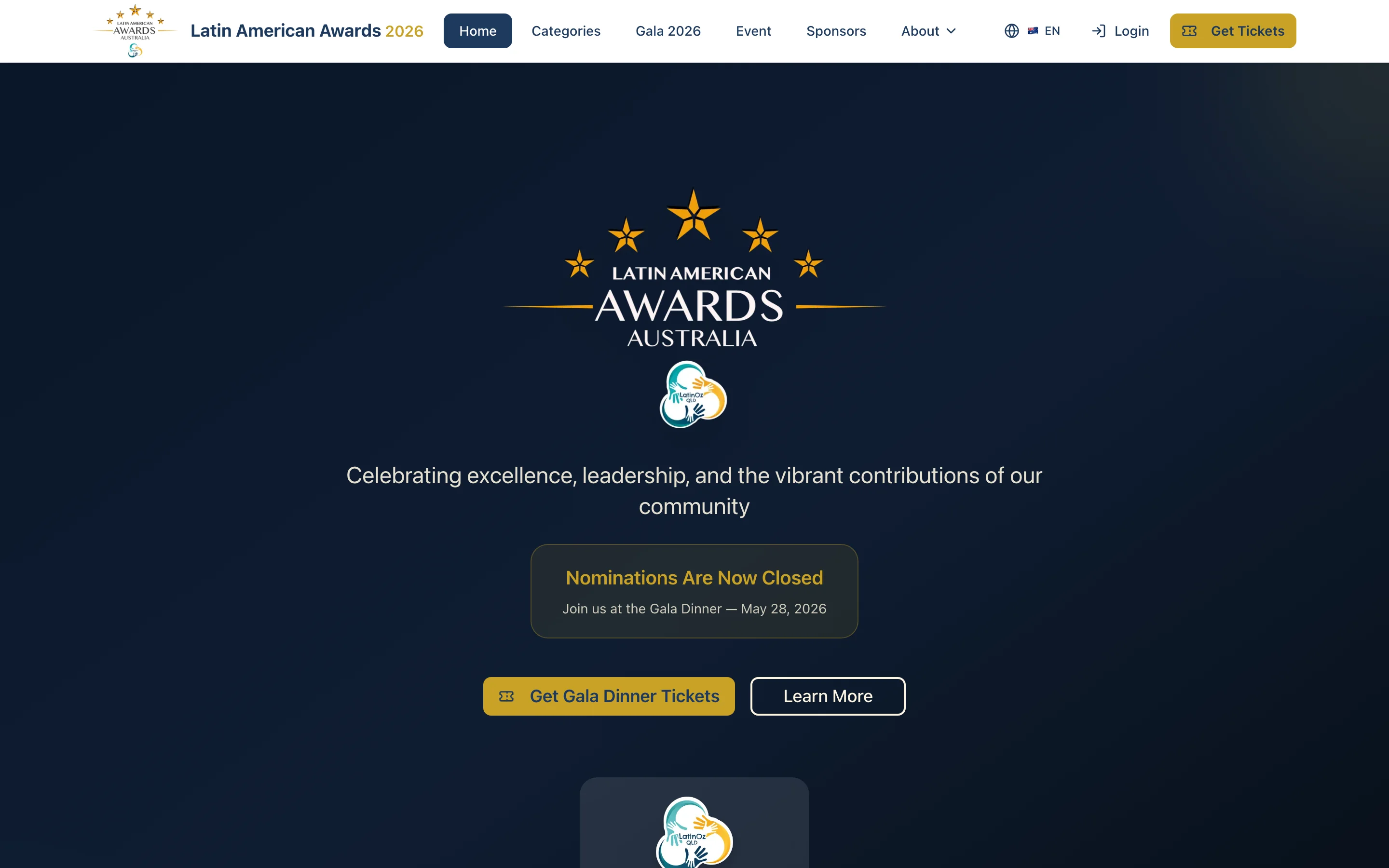
Latin American Awards Australia
The platform that transformed a manual awards process into a complete digital experience.
Read the case study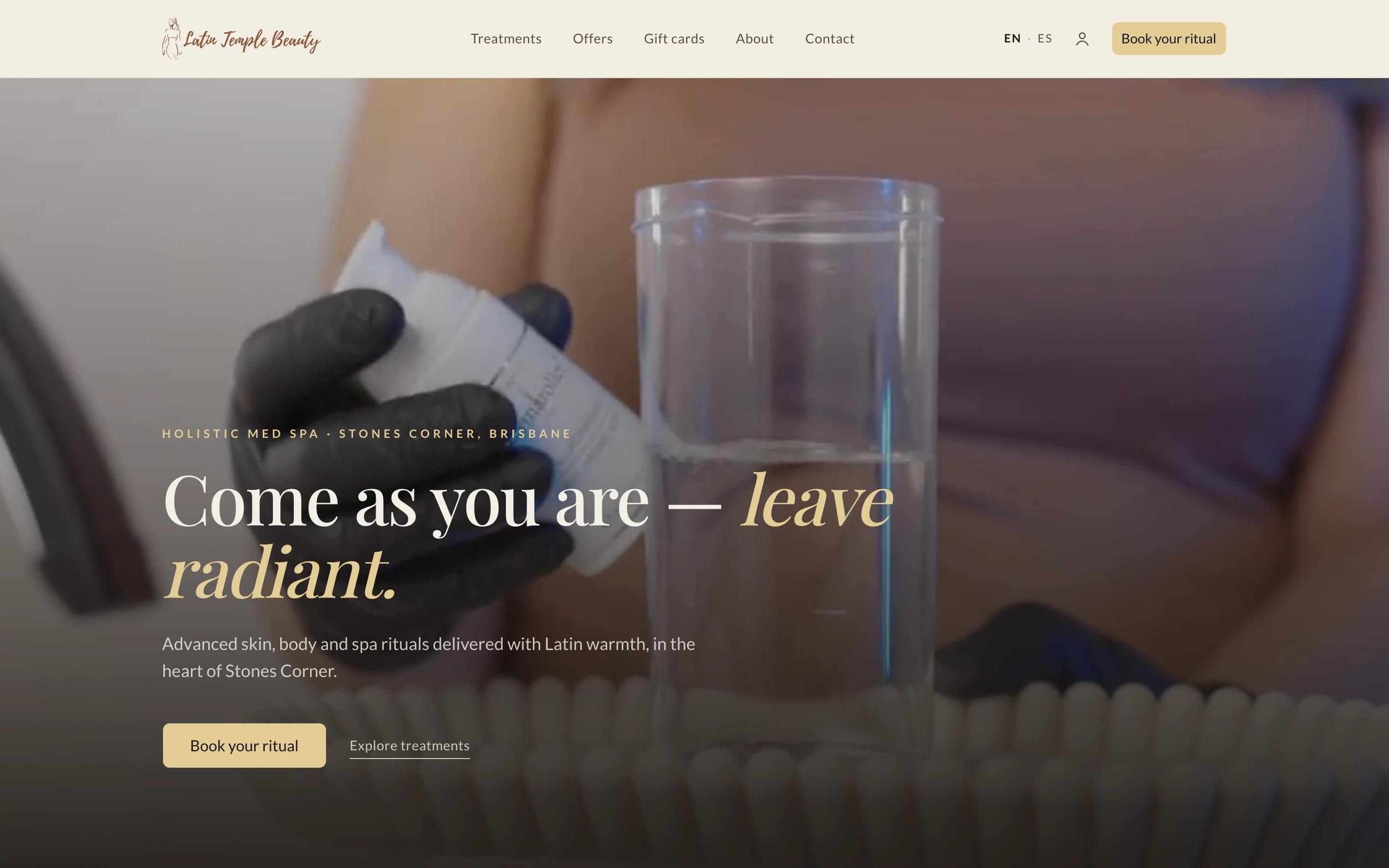
Latin Temple Beauty
Holistic med spa in Stones Corner, Brisbane — bilingual booking, client portal and digital gift cards in one platform.
Read the case study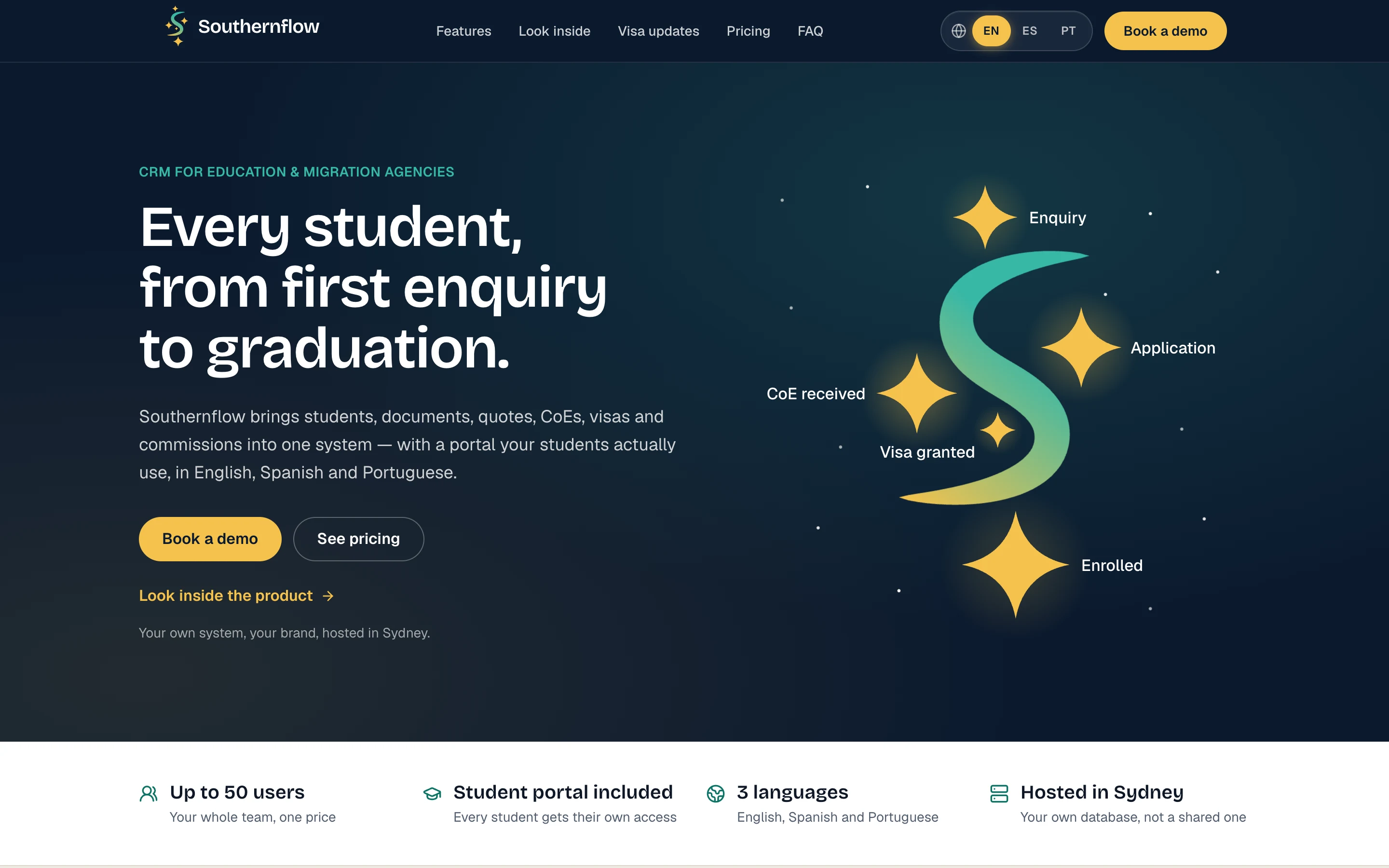
Southernflow
CRM for education and migration agencies: every student from first enquiry to graduation, with a student portal in English, Spanish and Portuguese.
Read the case studyWhen you don't need custom software
- You need to inform people and capture leads. That's what a website is for, and it costs less.
- You sell standard products online. Shopify does that well, and we'd point you to it.
- An existing tool already fits your process and you use most of what you pay for. Keep it: custom software earns its cost when off-the-shelf software makes you work around it.
Questions people ask
What is custom software?
Software built for one business and its way of working, instead of a product sold to thousands of businesses at once. It has the screens, rules and integrations your process needs and nothing else, and you own it.
How much does custom software development cost?
Our projects start at $3,000. The final price depends on what the software has to do and what it connects to, and it's fixed in a written proposal before work starts. Payment is usually 50% upfront and 50% on delivery.
When should I build custom software instead of using Shopify?
When selling is the simple part and everything around it isn't. For a standard online store, Shopify is the better choice. Custom makes sense when you need bookings, memberships, gift cards, portals or rules that a store template can't handle without a pile of paid apps.
Who owns the code?
You do. The source code is yours from launch, with no vendor lock-in. If you ever want another developer to take over, everything is handed over.
Can it connect to the tools I already use?
Usually, yes. We've built with Stripe and Wompi for payments, Resend for transactional email and Supabase for data and logins. Each integration is listed in the proposal, because it affects the price.
Can different people see different things?
Yes. Logins with roles are standard. On the Latin American Awards platform, nominees, jury members and the organising team each see only their own part of the process.
Can I start small and add features later?
Yes, and it's often the better way to start. Launch with the part that saves the most time, then add to it. New features are quoted as additional development, with 15% off for existing clients.
Can it work in more than one language?
Yes. Latin American Awards Australia and Latin Temple Beauty run in English and Spanish, and Southernflow runs in English, Spanish and Portuguese.
Only need to inform and capture leads? A website does that for less. And if part of the work can be automated with AI, our AI consulting looks at where it's worth it.